Authored by: Infant Pamper Team
After giving birth, many new moms are eager to regain their fitness and strength, with particular focus on postpartum ab exercises. These exercises are an excellent way to rebuild core strength, improve posture, and enhance overall wellness. However, it’s essential to approach postpartum abdominal exercises with care to ensure that you recover safely and effectively. Your body has gone through significant changes during pregnancy and childbirth, so returning to fitness should be gradual and mindful. If you’re still pregnant and preparing for recovery, you may also find our guide on back sleeping during pregnancy helpful.
In this guide, we will discuss how to safely get back to fitness with postpartum ab exercises, the importance of strengthening your core, and the best exercises to consider. Whether you’re looking for a postpartum exercise program to regain strength or you want to know how to strengthen abs postpartum, we’ve got you covered. Let’s dive into everything you need to know to restore your core health post-birth.
Table of Contents
- Understanding Your Postpartum Body
- Why Postpartum Ab Exercises Matter
- Postpartum abdominal Exercises to Get You Started
- Pelvic Tilts
- Modified Plank
- Bird-Dog Exercise
- Creating a Postpartum Exercise Program
- Tips for Success in Your Postpartum Fitness Program
- FAQs about Postpartum Ab Exercises
- Conclusion
Understanding Your Postpartum Body
After childbirth, the body goes through various changes, particularly in the abdominal area. The abdominal muscles, specifically the rectus abdominis, may have separated due to the growing baby, which can lead to a condition known as diastasis recti. This separation requires special attention when returning to exercise. It’s important to note that your pelvic floor muscles also need time to recover, and focusing on pelvic floor postpartum exercises should be part of your routine. You can read more about postpartum exercises from the American College of Obstetricians and Gynecologists.
Additionally, the core muscles that support your back, stomach, and pelvis can become weakened after pregnancy. These muscles are critical for your daily movements, so it’s essential to strengthen them to improve posture and avoid back pain. However, after childbirth, it’s important to ease into postpartum abdominal exercises to avoid injury. Consulting with a healthcare provider or physical therapist before starting any exercises is highly recommended.
Why Postpartum Ab Exercises Matter
Postpartum abdominal exercises are crucial for a few key reasons:
- Rebuilding Core Strength: Your core muscles support much of your daily movements. Postpartum abdominal exercises help rebuild this strength, improving your ability to carry and care for your baby.
- Restoring Pelvic Floor Health: Strengthening the pelvic floor is a vital aspect of postpartum recovery. Pelvic floor exercises postpartum help prevent issues like incontinence and pelvic organ prolapse, which are common after childbirth.
- Improving Posture: Weak abdominal muscles can contribute to poor posture and back pain. Postpartum belly exercises and core strengthening help you stand taller and feel more confident.
- Supporting Postpartum Weight Loss: Many women look for postpartum weight loss exercises to help shed the extra pounds gained during pregnancy. Abdominal exercises, along with full-body movements, can assist in this process.
- Boosting Mental Well-Being: Exercise has been shown to improve mood, reduce anxiety, and enhance sleep. Feeling stronger physically can also help boost your self-confidence as you adapt to motherhood.
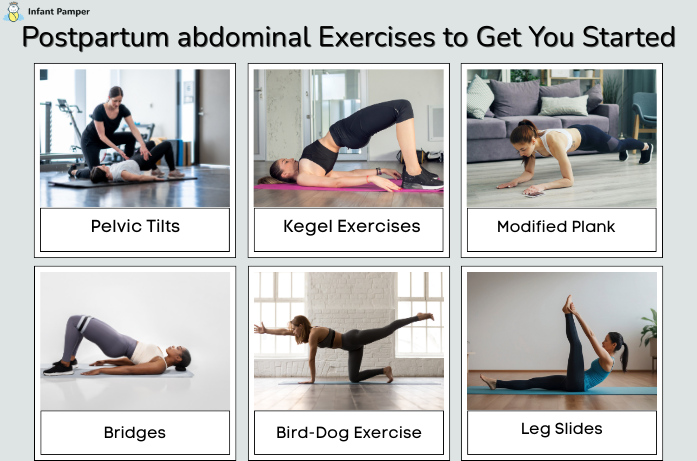
Postpartum abdominal Exercises to Get You Started
When starting a postpartum exercise program, it’s important to begin with exercises that are gentle yet effective in rebuilding your core. These exercises are designed to safely engage your abs without putting strain on your body. Here are some of the best postpartum workouts for abs: For more information about safe exercise post-pregnancy, the Mayo Clinic has a great guide on postpartum exercise.
1. Pelvic Tilts
Pelvic tilts are a great starting point to engage your abdominal muscles gently.
- Lie on your back with your knees bent and feet flat on the floor.
- Tighten your abdominal muscles and gently tilt your pelvis upward, pressing your lower back into the floor.
- Hold for 5 seconds, then relax.
- Repeat 10-15 times.
Pelvic tilts are especially beneficial for strengthening the lower back, which can often be weak after pregnancy.
2. Kegel Exercises
Pelvic floor exercises postpartum, like Kegels, help strengthen the muscles that support the bladder, uterus, and rectum.
- Sit or lie down in a comfortable position.
- Tighten the pelvic floor muscles as if you’re trying to stop the flow of urine.
- Hold for 5-10 seconds and relax.
- Repeat 10-15 times, 3 times a day.
Kegels are essential for promoting pelvic floor health and helping to prevent incontinence.
3. Modified Plank
The modified plank is an excellent way to strengthen your core and build stability.
- Start on your hands and knees, ensuring your wrists are directly under your shoulders and your knees are under your hips.
- Tighten your core muscles and hold the position for 10-30 seconds.
- Keep your body in a straight line from your head to your knees.
- Repeat 3-5 times.
This exercise helps strengthen both your abdominal muscles and your lower back.
4. Bridges
Bridges target your glutes, lower back, and core, making them one of the best postpartum belly exercises.
- Lie on your back with your knees bent and feet flat on the floor.
- Tighten your core and glutes as you lift your hips toward the ceiling.
- Hold for a few seconds, then lower your hips back down.
- Repeat 10-15 times.
Bridges also help strengthen the pelvic floor, making them an excellent addition to your postpartum workout for abs.
5. Bird-Dog Exercise
The bird-dog is a great exercise to engage both your abs and back muscles, improving balance and stability.
- Begin on your hands and knees with your wrists directly under your shoulders and your knees under your hips.
- Slowly extend your right arm and left leg, keeping your back flat and your core tight.
- Hold for 5 seconds, then return to the starting position.
- Repeat on the opposite side.
- Perform 10 repetitions on each side.
The bird-dog exercise not only strengthens your core but also helps improve coordination and balance.
6. Leg Slides
Leg slides are an excellent exercise for strengthening your lower abs and engaging your core while being gentle on your body. This exercise helps improve flexibility and mobility in your hips and lower back, which are often affected after childbirth.
- Lie on your back with your knees bent and feet flat on the floor, about hip-width apart.
- Tighten your abdominal muscles and slowly slide your right leg out straight, keeping your foot close to the floor.
- Hold for a few seconds and then slide your leg back to the starting position.
- Repeat with your left leg.
- Perform 10-15 repetitions on each side.
Leg slides are a great way to target your lower abs and gently activate your core muscles without putting too much strain on your body. You can also increase the difficulty by adding resistance bands or ankle weights as you progress in your postpartum fitness journey.
Creating a Postpartum Exercise Program
A well-rounded postpartum exercise program should focus on strengthening the core, pelvic floor, and entire body. After you’ve mastered basic exercises, you can begin to incorporate more dynamic movements, such as walking, swimming, or low-impact cardio. Incorporating full-body exercises, like squats, lunges, and gentle aerobic activities, will help you get back into shape and improve your cardiovascular health.
How to Build Your Program:
- Start with 10-15 minutes of exercise, 3-4 days a week.
- Gradually increase your workout duration and intensity as your strength and endurance improve.
- Focus on exercises that work both your abs and your pelvic floor.
- Always listen to your body and avoid overexertion.
Tips for Success in Your Postpartum Fitness Program
Start Slow: It’s crucial to listen to your body and ease into your routine. Don’t rush or push yourself too hard, especially if you’re experiencing discomfort or fatigue.
Stay Hydrated and Eat Well: A balanced diet and proper hydration are key to supporting your recovery and workout routine. Starting your day with a healthy breakfast can also help support your energy and healing.
Prioritize Rest: Exercise is essential for your recovery, but so is rest. Make sure you’re getting enough sleep and taking time for yourself.
Consult a Specialist: If you’re unsure about your postpartum exercise program or experience symptoms like pain or diastasis recti, consulting a physical therapist can help tailor exercises to your specific needs.
Conclusion
Postpartum ab exercises are crucial for rebuilding strength, improving posture, and promoting overall well-being after childbirth. By starting with gentle exercises, listening to your body, and gradually progressing to more challenging workouts, you can safely regain your fitness and strength.
Whether you’re looking to enhance your core with postpartum belly exercises or build a postpartum fitness program that includes pelvic floor exercises postpartum, taking small steps toward recovery will help you feel stronger, healthier, and more confident. Remember to always consult with your healthcare provider before starting any postpartum workout routine, especially if you have concerns about diastasis recti or other complications.
FAQs about Postpartum Ab Exercises
Disclaimer
This article is intended for informational purposes only and should not be taken as medical advice. Always consult with your doctor or a healthcare provider before starting any postpartum exercise program.
Ready to strengthen your core? Start your postpartum fitness journey today with safe and effective ab exercises! Visit Infant Pamper for more tips and support as you recover and regain your strength.
About the Author
Geeta Yogi is a parenting and motherhood writer who shares practical guidance about postpartum recovery, gentle fitness, pregnancy wellness, and everyday life after birth. Her writing focuses on helping moms approach recovery gradually, understand their changing bodies, and feel more confident as they rebuild strength after pregnancy.