A Caring Mom at Infant Pamper
Packing for childbirth can feel emotional, exciting, and slightly overwhelming all at once. One moment you’re folding tiny baby clothes with a smile, and the next you’re wondering if you’ve forgotten something important. That’s exactly why having a well-thought-out pregnancy hospital bag list matters so much. It’s not just about items, it’s about reassurance, preparedness, and peace of mind during one of the biggest moments of your life.
As a mom, I remember standing in my bedroom late at night, staring at an open bag, thinking, Is this enough? Is this too much? If you’re feeling that way, take a deep breath. You’re doing great already. This guide is written to gently walk you through everything you may need, without pressure or perfection, so you can focus on what truly matters, welcoming your baby.
This article is specially created for the Infant Pamper community, with the goal of guiding, supporting, and empowering new parents and caregivers.
Why Packing a Hospital Bag Matters More Than You Think
Your hospital bag is more than a checklist. It’s your comfort zone away from home. When labor starts, emotions run high and decisions feel harder. Having your bag ready allows you to stay calm and focused instead of scrambling at the last minute. This importance of early preparation is also emphasized by pregnancy guidance from American Pregnancy Association, which encourages parents to plan ahead to reduce stress during labor.
A thoughtfully packed bag helps you:
- Feel mentally prepared for labor
- Stay comfortable during your hospital stay
- Avoid unnecessary stress for you and your support person
Every birth experience is different, but preparation brings confidence to all of them.
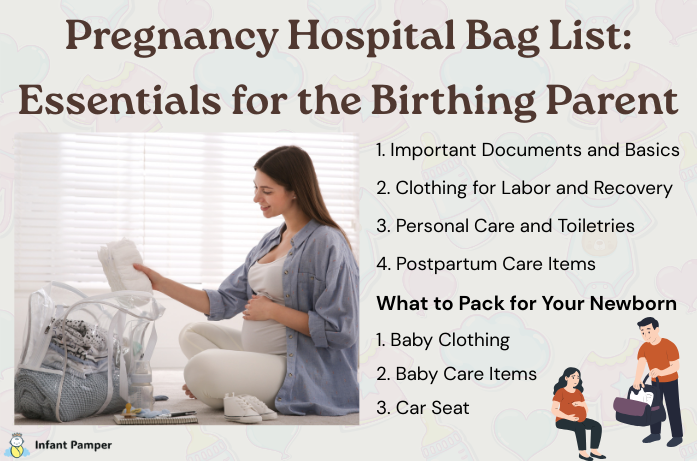
Pregnancy Hospital Bag List: Essentials for the Birthing Parent
This section focuses on items that support your comfort, recovery, and emotional well-being during labor and after delivery. Many hospital maternity checklists, including those shared by UNM Health, highlight the importance of packing essentials that support both physical recovery and emotional comfort.
1. Important Documents and Basics
Always keep these in an easy-access pouch:
- Photo identification
- Health insurance card
- Any hospital paperwork or notes from your provider
These small items are often needed first, and having them ready saves time and energy.
2. Clothing for Labor and Recovery
Your body will go through a lot, so comfort comes first.
- Loose-fitting nightgowns or labor-friendly clothing
- A soft robe for walking or visitors
- Non-slip socks or slippers
- A comfortable outfit to wear home
Choose breathable fabrics that feel gentle on your skin.
3. Personal Care and Toiletries
Hospitals provide basics, but familiar items can make you feel more like yourself:
- Toothbrush and toothpaste
- Lip balm (hospital air can be very dry)
- Hairbrush, hair ties, or headband
- Gentle face wipes or cleanser
Feeling refreshed even slightly, can make a big emotional difference.
4. Postpartum Care Items
After delivery, your body needs support and care:
- Maternity pads or disposable underwear
- Nursing bras and breast pads
- Nipple cream if you plan to breastfeed
Hospitals usually provide many of these, but personal preferences vary.
What to Pack for Your Newborn
Your baby doesn’t need much in the hospital, but a few essentials help you feel prepared. Hospitals typically provide basic care items, and official hospital bag guidance from public health services also encourages keeping newborn packing simple and practical.
1. Baby Clothing
- One or two newborn outfits
- Socks or booties
- A soft hat if permitted
- A special going-home outfit
Hospitals typically provide basic clothing, so keep this simple.
2. Baby Care Items
- Newborn diapers (optional)
- Fragrance-free baby wipes
- A light swaddle or blanket
3. Car Seat
A properly installed infant car seat is required for discharge in most hospitals. Install it ahead of time so it’s one less thing to worry about.
What to Bring for Your Support Person
Your partner or support person plays an important role, and their comfort matters too.
- Change of clothes and sleepwear
- Toiletries
- Snacks and a refillable water bottle
- Phone charger
A supported support person can better support you.
Comfort Items That Make a Big Difference
These items are optional, but many parents are grateful they packed them:
- Phone and extra-long charging cable
- Calming music or playlist
- Eye mask or earplugs
- A small personal item that brings emotional comfort
Labor can be unpredictable, and small comforts can feel surprisingly powerful.
When to Pack Your Hospital Bag
Many parents ask about when to pack hospital bag in pregnancy, and the answer is usually earlier than you think. Most healthcare providers recommend having your bag ready between 32 and 36 weeks.
Packing early helps because:
- Babies sometimes arrive ahead of schedule
- You can pack slowly without pressure
- You’ll feel mentally prepared sooner
If you prefer, pack most items early and add last-minute essentials closer to your due date.
Hospital Go Bag Pregnancy: Keep It Simple and Practical
Your hospital go bag pregnancy setup doesn’t need to be perfect or Pinterest-worthy. It just needs to work for you. Overpacking can make it harder to find what you need, especially during labor.
Try organizing your bag into small sections or pouches:
- One for documents
- One for toiletries
- One for baby items
This simple system saves time and frustration.
What to Pack in Hospital Bag: Common Mistakes to Avoid
Many first-time parents pack items they never use. Here are a few things you can safely skip:
- Too many baby outfits
- Expensive jewelry
- Large electronics or books
- Full-size pillows or bulky items
Hospitals are well-equipped, and less clutter often feels more calming.
FAQs
1. What to pack in a hospital bag pregnancy?
Focus on comfort, essentials, and emotional support. Clothing, toiletries, postpartum items, baby basics, and important documents are usually enough.
2. What to bring in hospital bag pregnancy?
Bring items that help you feel calm and cared for, such as comfortable clothing, personal hygiene items, and simple baby essentials.
3. What to take in hospital bag pregnancy?
Choose items that are easy to use, familiar, and supportive during labor and recovery. Avoid overpacking unnecessary extras.
4. When to pack bag for hospital pregnancy?
Most parents feel comfortable packing between 32 and 36 weeks, allowing time to prepare without last-minute stress.
Emotional Preparation Is Just as Important
Packing your hospital bag is often the moment when pregnancy starts to feel truly real. What once felt distant suddenly becomes close, and that shift can bring a wave of emotions. Excitement, nervousness, fear, and even self-doubt are all very common at this stage.
Emotional preparation doesn’t mean you won’t feel anxious it means you’re learning to hold those feelings with care. Packing slowly and thoughtfully can help you feel more grounded and in control, especially when so much about birth feels unpredictable.
Taking your time with this process is a form of self-care. Eating healthy breakfast foods for pregnancy can also help keep your energy levels steady as you prepare for labor and delivery. Each item you place in your bag is a quiet reminder that you’re preparing with intention, love, and trust in yourself.
Final Thoughts from Infant Pamper
At Infant Pamper, we believe preparation should feel supportive, not overwhelming. Getting ready for birth is not about doing everything perfectly, but about feeling informed and reassured along the way.
This guide was created to help you feel confident and calm as you approach this important moment. You are allowed to take things one step at a time and prepare in a way that feels right for you.
Trust your instincts, lean into your support system, and remember you are already doing an incredible job preparing for your baby. Following a high-iron diet for pregnancy can also support healthy energy levels and overall well-being in the final weeks before birth.
Medical Disclaimer: This article is for informational purposes only and does not replace professional medical advice. Always follow the guidance of your healthcare provider regarding pregnancy, labor, and hospital preparation.
You are doing something incredible. With a packed bag and a prepared heart, you are more ready than you think.