A healthy pregnancy meal plan is essential for both you and your baby’s well-being. During pregnancy, your body requires additional nutrients to support the growing fetus, while also ensuring you stay healthy and energized. A carefully structured meal plan can help alleviate pregnancy-related symptoms, provide vital nutrients, and support the overall development of your baby.
Whether you’re in your first, second, or third trimester, your body’s nutritional needs will evolve, and adapting your diet accordingly is crucial. This guide will break down what foods to eat during each trimester, provide a detailed pregnancy meal plan, and offer advice on making sure you’re getting the essential nutrients you need. Let’s also take a closer look at specific meal plans, such as a 7-day meal plan for pregnant women, tailored to each stage of pregnancy.
The Importance of a Pregnancy Meal Plan
Before diving into the details of what you should eat during pregnancy, it’s important to understand why a healthy pregnancy meal plan is so critical. If you’ve recently conceived, our article on the first 72 hours of pregnancy symptoms can help you understand what to expect during the earliest stage of pregnancy. Nutrient-dense foods provide the vitamins and minerals required for both your and your baby’s health. Protein, iron, calcium, and folic acid are just some of the essential nutrients you’ll need to include regularly in your diet.
A comprehensive guide on nutrition during pregnancy from Oregon Health & Science University emphasizes how planning meals can ensure you’re getting the right balance of nutrients to support both you and your baby.
First Trimester Meal Plan: Essential Nutrients for Early Development
The first trimester marks the earliest stage of your pregnancy, and during this time, your baby’s organs and structures begin to form. This is a crucial period for ensuring proper nutrition, as your baby’s growth and development depend heavily on the nutrients you provide.
Key Nutrients to Focus On:
- Folic Acid: Folic acid is essential during the first trimester to reduce the risk of birth defects. Aim for at least 400-600 mcg of folic acid daily. Foods like spinach, fortified cereals, and citrus fruits are great sources of folic acid.
- Protein: Protein supports the growth of tissues and cells, so it’s important to consume enough, especially during the first trimester. Lean meats, eggs, and legumes are excellent sources of protein.
- Iron: Increased iron intake helps prevent anemia and supports your growing blood volume. Include iron-rich foods like lean meats, beans, and fortified cereals. For more tips on choosing iron-rich foods, read our guide to a high-iron diet for pregnancy.
Example Meal Plan for the First Trimester:
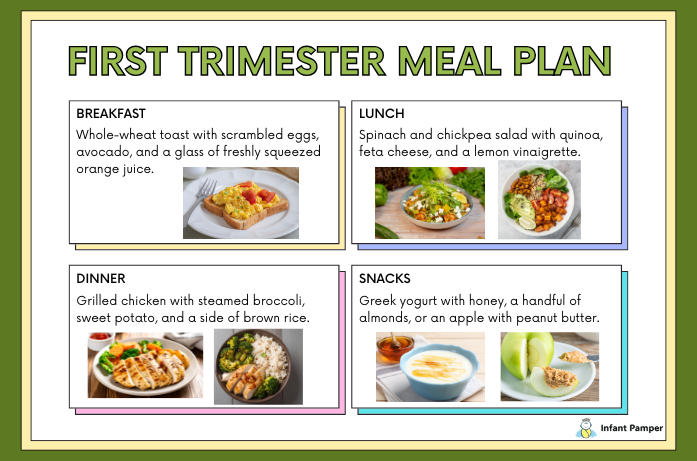
- Breakfast: Whole-wheat toast with scrambled eggs, avocado, and a glass of freshly squeezed orange juice.
- Lunch: Spinach and chickpea salad with quinoa, feta cheese, and a lemon vinaigrette.
- Dinner: Grilled chicken with steamed broccoli, sweet potato, and a side of brown rice.
- Snacks: Greek yogurt with honey, a handful of almonds, or an apple with peanut butter.
Second Trimester Meal Plan: Supporting Growth and Energy
As you move into the second trimester, your baby’s organs are maturing, and your body needs more energy to support its growing size. This is the time when many women report feeling better and more energized. It’s important to continue eating a balanced diet, as your baby’s bones, muscles, and brain will develop rapidly.
The U.S. Department of Health and Human Services provides helpful tips on how to balance your diet to meet your baby’s nutritional needs during this time.
Key Nutrients to Focus On:
- Protein: Now is the time to ramp up your protein intake, as your baby’s tissues and organs are growing rapidly. Aim for 70-100 grams of protein per day, incorporating lean meats, tofu, eggs, and legumes into your meals.
- Calcium and Vitamin D: As your baby’s bones and teeth develop, calcium becomes even more important. Ensure you’re getting at least 1000 mg of calcium per day from dairy products, fortified plant milk, and leafy greens. Vitamin D, which is needed to absorb calcium, should also be prioritized through sources like fortified milk or sunlight exposure.
- Iron: Your blood volume increases, and your baby requires more iron to build red blood cells. Include iron-rich foods like red meat, lentils, and fortified cereals.
Example Meal Plan for the Second Trimester:
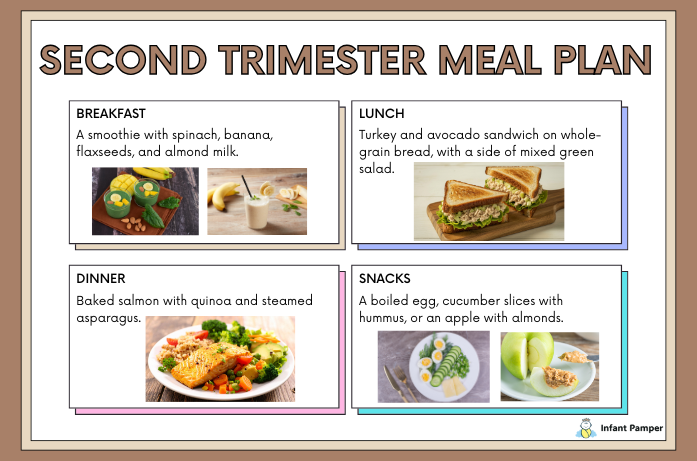
- Breakfast: A smoothie with spinach, banana, flaxseeds, and almond milk.
- Lunch: Turkey and avocado sandwich on whole-grain bread, with a side of mixed green salad.
- Dinner: Baked salmon with quinoa and steamed asparagus.
- Snacks: A boiled egg, cucumber slices with hummus, or an apple with almonds.
Third Trimester Meal Plan: Preparing for Birth
In the third trimester, your baby is growing rapidly, and your energy needs will increase to support both you and your baby.
According to the U.S. Veterans Affairs, maintaining a nutrient-rich diet during the final trimester helps support the baby’s final stages of growth, particularly their bones, brain, and organs.
Key Nutrients to Focus On:
- Protein: Protein continues to be a priority in the third trimester to support both your body and your baby’s development. Aim for at least 80-100 grams of protein daily.
- Calcium and Vitamin D: These nutrients will help with your baby’s developing bones and teeth. Continue consuming calcium-rich foods such as dairy and leafy greens.
- Iron: Iron helps prevent fatigue and ensures your body is producing enough blood for both you and your baby.
Example Meal Plan for the Third Trimester:
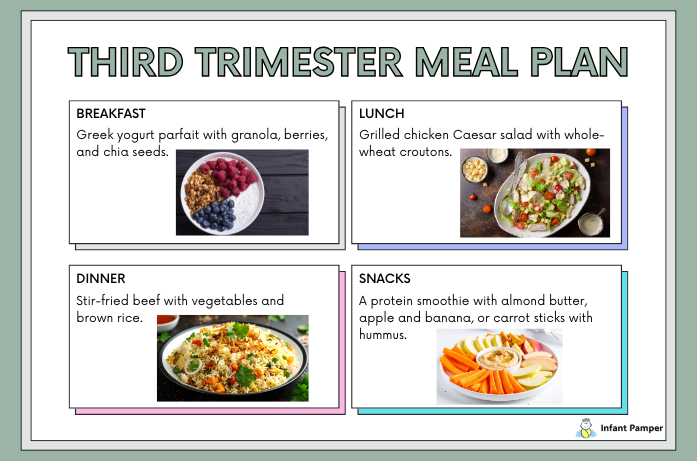
- Breakfast: Greek yogurt parfait with granola, berries, and chia seeds.
- Lunch: Grilled chicken Caesar salad with whole-wheat croutons.
- Dinner: Stir-fried beef with vegetables and brown rice.
- Snacks: A protein smoothie with almond butter and banana, or carrot sticks with hummus.
7-Day Meal Plan for Pregnant Women
To make things easier, here’s a simple 7-day meal plan for pregnant women. This plan includes a variety of nutrient-dense foods and covers your nutritional needs throughout each trimester.
Day 1:
Breakfast: Oatmeal with almond butter, banana, and chia seeds.
Lunch: Grilled chicken with quinoa and steamed broccoli.
Dinner: Salmon with sweet potato and green beans.
Snack: Greek yogurt with berries.
Day 2:
Breakfast: Scrambled eggs with spinach, toast, and avocado.
Lunch: Turkey and cheese sandwich with a side of carrots and hummus.
Dinner: Beef stir-fry with brown rice and bell peppers.
Snack: Almonds and an apple.
Day 3:
Breakfast: Whole-wheat toast with scrambled eggs, avocado, and tomatoes.
Lunch: Lentil soup with a side of mixed greens.
Dinner: Baked chicken with roasted vegetables and quinoa.
Snack: Celery sticks with peanut butter.
Day 4:
Breakfast: Smoothie with spinach, berries, chia seeds, and almond milk.
Lunch: Grilled chicken with avocado, cucumber, and tomato salad.
Dinner: Grilled salmon with steamed asparagus and quinoa.
Snack: A boiled egg and a handful of mixed nuts.
Day 5:
Breakfast: Greek yogurt with granola and honey.
Lunch: Chickpea salad with olive oil and lemon dressing.
Dinner: Grilled beef with sweet potato and steamed vegetables.
Snack: Cottage cheese with pineapple slices.
Day 6:
Breakfast: Smoothie with banana, spinach, almond milk, and flaxseeds.
Lunch: Turkey and avocado wrap with a side of mixed greens.
Dinner: Stir-fried shrimp with brown rice and vegetables.
Snack: Apple with peanut butter.
Day 7:
Breakfast: Scrambled eggs with avocado and whole-grain toast.
Lunch: Quinoa salad with grilled chicken, spinach, and feta.
Dinner: Grilled pork with roasted vegetables and brown rice.
Snack: Carrot sticks with hummus.
Foods to Eat with Gestational Diabetes
If you have gestational diabetes, managing your blood sugar levels is crucial for a healthy pregnancy. Include foods with a low glycemic index (GI) like leafy greens, non-starchy vegetables, lean proteins, and whole grains. Also, eat smaller meals throughout the day to maintain stable blood sugar levels.
Some helpful foods include:
- Leafy greens (spinach, kale, etc.)
- Non-starchy vegetables (broccoli, cauliflower, etc.)
- Whole grains (brown rice, quinoa, oats)
- Lean proteins (chicken, turkey, tofu)
- Healthy fats (avocados, olive oil, nuts)
Conclusion: A Healthy Pregnancy Meal Plan for Every Stage
Having a healthy pregnancy meal plan can make a big difference in how you feel throughout your pregnancy. From the first trimester to the third, your nutritional needs will evolve, and tailoring your diet accordingly will ensure you stay energized, healthy, and ready for the challenges of pregnancy and motherhood.
Remember to consult with your healthcare provider before making any significant dietary changes, and ensure you’re getting the right nutrients at each stage of your pregnancy. With a balanced diet, you’re setting the stage for a healthy pregnancy and a healthy baby.
FAQs About Pregnancy Meal Plans
1. What foods should I avoid during pregnancy?
Avoid raw meats, unpasteurized dairy, high-mercury fish, and processed foods. These can pose risks to both you and your baby. Always opt for fresh, whole foods.
2. How much water should I drink during pregnancy?
Aim for 8-10 glasses of water a day to stay hydrated and support your body’s increased blood volume. Hydration is also key for reducing swelling and constipation.
3. Can I follow a vegetarian or vegan diet during pregnancy?
Yes, you can, but it’s essential to ensure you’re getting enough protein, iron, calcium, vitamin B12, and omega-3 fatty acids from plant-based sources or supplements.
4. How can I manage gestational diabetes through diet?
Focus on low-glycemic foods, lean proteins, whole grains, and non-starchy vegetables. Avoid sugary snacks, and consult your healthcare provider for a personalized meal plan.
5. What are the best snacks during pregnancy?
Healthy snacks include Greek yogurt, fresh fruit, nuts, whole-grain crackers, and hummus with veggies. These provide essential nutrients and help maintain energy levels throughout the day.
Ready to eat right for you and your baby? Check out more pregnancy meal tips and advice on Infant Pamper. Start your healthy journey today!
Disclaimer: This article is intended to provide general information and is not a substitute for medical advice. Always consult with your healthcare provider for personalized dietary recommendations during pregnancy.