Breastfeeding is beautiful, but numerous new mothers are surprised when they witness Breastfeeding and sharp nipple pain, a discomfort that feels unforeseen, smarting, or indeed like a burning sensation deep inside thebreaste. This pain can appear in the first week or develop later, frequently leaving mothers anxious, emotional, and doubtful about whether the condition is wrong. You’re not alone. In numerous maters face this challenge, and understanding the cause is the first step toward mending and confidence.
Utmost pain has a repairable explanation, whether it comes from poor latch, nipple trauma, infection, or sensitivityto milk let- down. With accurate information and the right adaptations, breastfeeding can become comfortable again.
Understanding Breastfeeding and Sharp Nipple Pain
Sharp nipple pain often starts suddenly and may continue during or after feeds. Some moms feel a burning sting, while others describe shooting sensations that radiate into the breast, chest, or even shoulder. Sometimes, mothers also noticassociateded discomfort similar to arm pain during breastfeeding, or pangs that feel connected to feeding posture or pressure.
Though many assume pain is “normal” patient or violent discomfort is a sign that commodity needs attention. Medical experts such as the La Leche League International emphasize that breastfeeding should not be consistently painful.
Main Causes of Sharp Nipple Pain While Breastfeeding
A shallow latch remains the leading cause of discomfort. When your baby attaches to just the nipple rather than the areola, the nipple gets compressed and irritated. This can leave the nipple looking smoothed, crinkled, or slanted after feeding. A deep and well- supported latch generally reduces pain incontinently, though some soreness canlingerr in the early days. Milk let- down kickback can also spark a sharp, chinking sensation. For some matters, this kickback feels like a quick electric sting, but it should ease within seconds. However, it may indicate another issuif it continues.
Nipple vasospasm causes unforeseen pecking pain touched off by cold temperatures or contraction. The nipple may turn pale, granular, or bright red. Warm compresses and better latch frequently help.
Thrush infection can produce burning, pecking pain that continues between feeds. However, short, or surprisingly sensitive, If the nipple becomes itchy. The CDC explains that thrush requires treatment for both mother and baby.
Engorgement or surfeit can beget pressure that makes latching painful. When guts come too full, your baby may struggle to latch deeply, leading to nipple trauma or increased setting. This pressure occasionally radiates into the casket, which causes breastfeeding pain in the casket or casket pain breastfeeding, adding to the discomfort.
Oral restrictions like lingo- tie can force a baby to suck or fix down for stability. This creates repeated nipple pain and can lead to damage if not addressed. A lactation specialist can assess your baby’s lingual mobility if this seems likely.
Still, incorrect flange size or high suction can beget nipple pinching and sharp sensations, if you pump. Pumping should noway be painful; discomfort is a sign commodity needs conforming.

Related Pains That Can Occur With Nipple Discomfort
Some patients feel pain or palpitation that spreads beyond the nipple. Pressure from feeding posture can produce pain in underarm breastfeeding, while congested tubes may beget tender heartedness radiating toward the crest. Some women indeed report breastfeeding and pain in crest during early engorgement or when the tubes become engorged.
Infrequently, emotional stress or posture pressure causes appertained discomfort similar to throat pain breastfeeding when swallowing becomes simulated from long feeding sessions.
These symptoms should always be covered and discussed with a healthcare professional if they persist.
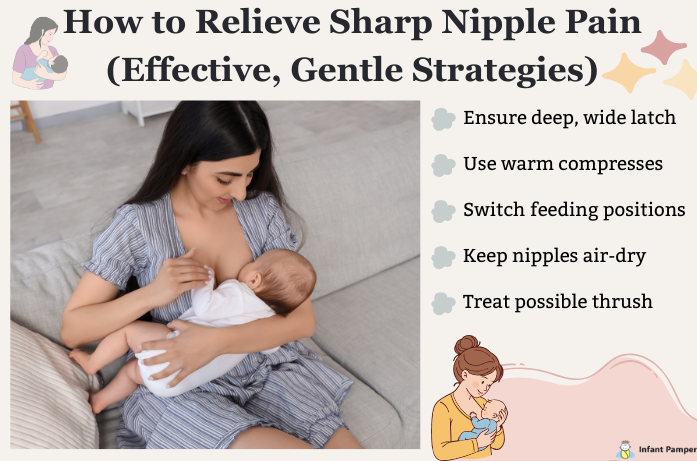
How to Relieve Sharp Nipple Pain (Effective, Gentle Strategies)
A proper latch is the most important starting point. Your baby’s mouth should open wide, covering more of the areola, with lips flanged outward. The chin should rest against your breast, and the neck should remain straight. A deep latch almost always reduces pain quickly.
Warm compresses before feeding ameliorate rotation and reduce vasospasm. Gentle warmth can lessen shooting sensations that occur when milk lets down.
Feeding in different positions helps sore nipples recover. A football hold, side- lying posture, or cradle hold may shift pressure down from injured areas. Rotating positions also helps the nipples heal unevenly.
Humidity balance is essential. Allowing the nipples to air-dry after feeding can help prevent cracking. Overwashing with detergents can worsen vexation, so gentle cleaning is best.
If thrush is suspected, consult a healthcare provider. Both mother and baby need treatment; otherwise, the infection cycles back and forth.
Three Key Relief Measures at a Glance
- Ameliorate latch depth and positioning incontinently when pain occurs.
- Apply warmth before feeds and ensure nipples stay dry between feedings.
- Seek evaluation for thrush, vasospasm, or oral restrictions if pain persists.
When Is Sharp Nipple Pain Not Normal?
Pain that continues after the first week of breastfeeding should not be ignored. However, bleedingor extremely sensitive, if the nipple is cracked. Thrush generally causes burning pain between feeds, while vasospasm causes color changes and violent smarting after bathing.
If pain spreads to the chest during feeds or feels like painful breastfeeding on one side, this may indicate a clogged duct or early mastitis. Sudden severe pain combined with fever or chills needs medical attention.
Some matters need temporary pain support. Always consult your doctor before taking a pain drug during breastfeeding, so you know what’s safe for your baby.
Preventing Sharp Nipple Pain in the Future
Good latch technique is your best long-term protection. Keeping feeding sessions relaxed, repositioning frequently, and correcting shallow latches early prevents ongoing irritation. Avoid scrubbing nipples or using harsh products that strip natural oils.
Feeding frequently can help prevent engorgement and congested tubes. Hear to your body, pressure in the neck, shoulders, or arms can worsen nipple perceptivity and indeed produce symptoms like painful breastfeeding or discomfort spreading through the arm.
Good latch technique is your best long-term protection. Keeping feeding sessions relaxed, repositioning frequently, and correcting shallow latches early prevents ongoing irritation. Eating a balanced diet and knowing which foods to avoid when breastfeeding may also help support both your recovery and your baby’s comfort.
FAQs About Sharp Nipple Pain
Q.1 Why does sharp pain occur during breastfeeding?
It generally comes from poor latch, nipple contraction, vasospasm, or thrush.
Q.2 Why do I feel nipple pain after breastfeeding?
This may be from moppinginflammation, trauma from a shoal latch, or nipple pain after suckling caused by vasospasm or infection.
Q.3 How to ease nipple pain from breastfeeding?
Deep latch technique, warm compresses, and occasional rest with gentle pumping can help. Many mothers search fowayssow to ease nipple pain from breastfeeding, and these steps are often the most effective.
Q.4 Can breastfeeding cause pain in the chest or armpit?
Yes, clogged ducts or engorgement sometimes cause pressure or tightness resembling chest pain,, breastfeedi, ng, or tenderness like pain the in the underarm.
Q.5 How to reduce the pain of breastfeeding overall?
Moms often ask how to reduce the pain of breastfeeding, and the answer usually involves latch correction, posture support, warm compresses, and early treatment for infections.
Final Thoughts From a Caring Mom
Still, please know it does not reflect your capability as a mamaif you’re floundering with breastfeeding and sharp nipple pain. This trip is a literacy process for both you and your baby. With tolerance, guidance, and the right ways, breastfeeding can be peaceful, nutritional, and comfortable again. Infant Pamper is here to support you with clarity, empathy, and evidence-backed guidance.
As your body continues healing after childbirth, focusing on gentle self-care and postpartum recovery can also support a more comfortable breastfeeding experience.
Disclaimer: This article provides general information and is not a substitute for professional medical advice. Consult a healthcare provider or lactation adviser for particular guidance.