By a Caring Mom at Infant Pamper
Introducing solids is a special moment in your baby’s journey, and most parents want the safest, gentlest, and healthiest foods to begin with. Many families choose baby oatmeal as a first solid because it’s soft, nourishing, easy to digest, and incredibly versatile. Whether you’re exploring new feeding routines, learning how to prepare meals, or even choosing a baby Christmas outfit for upcoming family photos, having a reliable food option like oatmeal can make your everyday routine calmer and more enjoyable.
This detailed guide explains when to start oatmeal, how to prepare it safely, how much to serve, the best baby oatmeal recipe ideas, and expert-based feeding tips to make your baby’s transition smooth and stress-free.
When Can Babies Start Eating Baby Oatmeal
Most babies begin solid foods around six months, though readiness signs matter more than age. A baby ready for baby cereal oatmeal usually sits with support, holds their head steady, explores food with interest, and no longer pushes food out with their tongue. These developmental milestones show that your baby is prepared to try new textures.
Many parents trust oatmeal because it’s mild and accepted easily by infants. Pediatricians also appreciate its nutritional value, especially for babies who need iron-rich foods at this stage. Trusted sources such as the AAP confirm that introducing one single-grain cereal at a time is the safest approach.
Why Baby Oatmeal Is an Excellent First Food
Parents worldwide consider oatmeal one of the best baby oatmeal options for beginners. It offers essential nutrients such as fiber, iron, magnesium, B-vitamins, and antioxidants, supporting brain development, digestion, and early growth. Oatmeal also has a naturally soft and mild taste, making it an easy transition from exclusive milk feeding.
Important Benefits of Baby Oatmeal
Below are the most important reasons oatmeal stands out as a top first food. These bullet points are written with strong keyword placement for better ranking:
Why Parents Choose Baby Oatmeal
- Easy to digest: Perfect for sensitive tummies, making baby cereal oatmeal ideal for beginners.
- Rich in nutrients: Provides natural fiber and iron, especially when using iron-fortified or organic baby oatmeal.
- Versatile in recipes: Works beautifully with fruit purées, making every baby oatmeal recipe customizable and nutritious.
- Gentle on digestion: Helps relieve mild constipation due to its soluble fiber content.
Baby Oatmeal vs Other First Foods
- Safer than rice cereal: Many parents choose baby oatmeal cereal to avoid excess arsenic sometimes found in rice products.
- Pairs with breastmilk or formula: Creates a familiar flavor for babies trying solids for the first time.
- Works for different textures: Smooth for beginners and chunkier for older infants, making it one of the best baby oatmeal options for long-term use.
Types of Baby Oatmeal to Use
Choosing the right type of oatmeal depends on your baby’s age and feeding stage. New eaters typically begin with single-grain baby oatmeal cereal because of its smooth consistency. Parents who enjoy homemade foods often grind rolled oats to create their own organic baby oatmeal, giving more control over ingredients and purity.
As babies grow, rolled oats cooked until soft become an excellent way to introduce more texture. You can also introduce nutritious vegetables with homemade broccoli puree as your baby becomes comfortable with new flavors. They can be mashed, blended, or mixed with fruit purées. Steel-cut oats, though nutritious, are too coarse for infants and better suited for older toddlers.
No matter the type you choose, the key is to prepare oatmeal in a safe, age-appropriate texture that supports easy swallowing.
How to Make Baby Oatmeal Safely and Easily
When learning how to make baby oatmeal, start simple. For a beginner-friendly consistency, mix one tablespoon of baby oatmeal cereal with warm breastmilk, formula, or water. Stir it thoroughly until it becomes thin and smooth, almost drinkable. New eaters need runny textures because they’re still learning how to swallow solids.
As your baby gains confidence, thicken the oatmeal gradually. Ground rolled oats can also be cooked into a creamy consistency and adjusted with liquid depending on your baby’s age.
Parents should avoid adding sweeteners such as honey or sugar. Honey is especially dangerous before age one due to botulism risk. Always serve oatmeal warm, not hot, and introduce only one ingredient at a time to monitor allergies.
How Much Baby Oatmeal Should a Baby Eat?
Feeding quantities vary depending on your baby’s appetite and growth stage. At the beginning, some babies take just a few small spoonfuls, while others happily enjoy a couple of tablespoons. By eight or nine months, many babies enjoy a quarter cup or more per meal. Some toddlers eventually eat oatmeal daily because it’s comforting and easy to digest.
Trust your baby’s cues, leaning forward, opening their mouth, or showing excitement indicates hunger, while turning away or closing their mouth signals fullness.
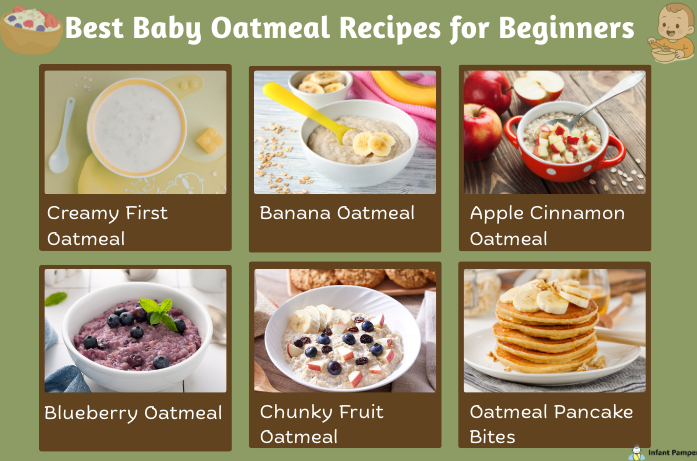
Best Baby Oatmeal Recipes for Beginners
One of the joys of feeding oatmeal is how easily it adapts to new flavors. Below are some versatile recipes perfect for early feeding stages:
Creamy First Oatmeal
Mix baby oatmeal cereal with breastmilk or formula. It’s smooth, comforting, and ideal for babies trying solids for the very first time.
Banana Oatmeal
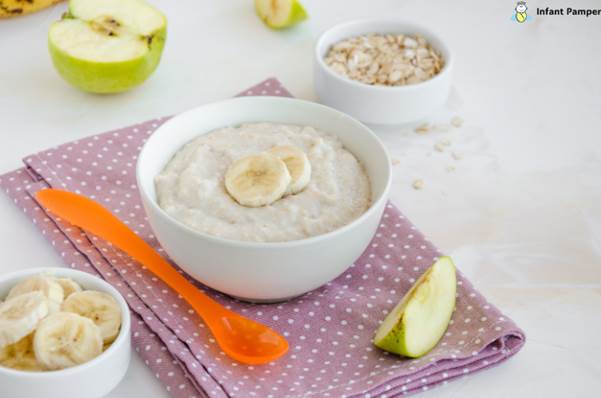
Mash a soft banana and mix it with oatmeal to create natural sweetness with calcium and potassium. Babies love its silky texture.
Apple Cinnamon Oatmeal
Add steamed apple purée and a tiny pinch of cinnamon for fragrance. This nutrient-rich blend introduces gentle new flavors without any sugar.
Blueberry Oatmeal
A beautifully colored option made by mixing blueberry purée into warm oatmeal. Blueberries bring antioxidants and a fun twist to the bowl.
Chunky Fruit Oatmeal
For older babies, mix cooked rolled oats with finely chopped soft fruits like pear, mango, or banana. This helps babies learn to chew safely.
Oatmeal Pancake Bites
Mix mashed banana, egg yolk, and ground oats to create soft pancake pieces perfect for babies practicing self-feeding.
Each baby oatmeal recipe allows you to adjust flavor and thickness based on your baby’s needs.
Can Baby Oatmeal Help With Constipation?
Yes. Oatmeal’s natural soluble fiber helps soften stools and support healthy digestion. If your baby needs extra digestive support, homemade prune puree is another gentle and nutritious option. Babies who struggle with mild constipation often respond well when oatmeal is paired with pear, prune, or peach purées. After six months, offering small amounts of water also helps. If constipation persists, consult your pediatrician.
Allergies and Sensitivities to Watch For
Oat allergies are rare, but parents should still watch for unusual symptoms such as diarrhea, vomiting, swelling, or rash after feeding. Some babies may react if they have gluten sensitivity, especially when oats are processed in facilities that also handle wheat.
Introducing one new food at a time helps identify sensitivities quickly. Parents who want reputable research can visit nih.gov for medical information on infant food allergies.
Common Mistakes Parents Make With Baby Oatmeal
Many parents unintentionally prepare oatmeal too thick during the early feeding stage, making swallowing difficult. Others add sugar or syrups, which babies do not need. Temperature matters as well, oatmeal tends to stay hot longer than expected. Serving it too hot is a common error.
Another mistake is offering too many new ingredients at once. Babies need time to adapt to each flavor and texture. Finally, coarse oats such as steel-cut oats should be avoided until your baby is much older.
Tips for Feeding Baby Oatmeal Successfully
Feeding is more than nourishment, it’s bonding. Serve oatmeal during quiet, calm moments so your baby can explore, play, and enjoy the experience. Offering variety helps your baby develop curiosity about food. You can store oatmeal safely in the refrigerator for up to two days and reheat it with a splash of warm liquid for a soft texture.
Parents who prefer organic baby oatmeal appreciate its simple ingredients, but both organic and traditional oatmeal can be healthy and safe. Whether you serve oatmeal warm in the morning or mix it with fruit for an afternoon snack, it remains one of the easiest foods to enjoy throughout infancy.
And yes, messy oatmeal cheeks make adorable memories, especially when your little one is all dressed up in a cute baby Christmas outfit!
Conclusion
Introducing baby oatmeal is a wonderful way to begin your baby’s solid-food journey. It’s comforting, nutritious, and incredibly easy to prepare, offering endless possibilities for delicious, baby-friendly meals. Whether you’re preparing a simple bowl of baby cereal oatmeal or experimenting with creative blends for the best baby oatmeal experience, every spoonful helps your baby grow, learn, and explore.
Trust your baby, follow their cues, and enjoy the process. Infant Pamper is here to support you at every step of your parenting journey.
Disclaimer: This article is for informational purposes only and should not replace professional medical advice. Always consult your pediatrician before introducing new foods.
FAQs About Baby Oatmeal
1. When can I start giving baby oatmeal?
Most babies can start baby oatmeal around 6 months, once they show readiness signs like sitting with support and good head control.
2. Can I mix baby oatmeal with breastmilk or formula?
Yes! Mixing baby oatmeal with breastmilk or formula makes it smooth, familiar, and easy for babies to accept.
3. How thick should baby oatmeal be?
For beginners, keep it thin and runny. You can gradually thicken it as your baby gets older and more comfortable.
4. Can baby oatmeal help with constipation?
Yes. The natural fiber in baby oatmeal can help relieve mild constipation and support healthy digestion.
5. How often can my baby eat oatmeal?
Your baby can eat oatmeal daily as long as they are also getting fruits, vegetables, and other nutrients for balance.
Start your baby’s solid-food journey with confidence. Discover more easy recipes, feeding tricks, and mom-tested tips at Infant Pamper.